Somewhere around the second week of October, a homeowner in East Tennessee looks at their driveway, notices the gray, faded patches that showed up over summer, and thinks this is the year to finally get it sealed. Then they call around, and every contractor gives them a different answer about whether it’s too late.
That question, whether fall is still a safe window or whether waiting until spring is smarter, actually has a real answer, and it has nothing to do with how the driveway looks. It has to do with what the ground and the air are doing while the sealcoat tries to cure.
In this article:
- Why Summer Sun Sets Up the Problem Fall Has to Fix
- The Temperature Window Nobody Mentions Until It’s Gone
- Why a Half Cured Sealcoat Is Worse Than No Sealcoat At All
- Crack Filling First, Sealcoating Second, Never the Other Way Around
- New Driveway Paving in Fall: A Different Set of Rules
- What Actually Drives Cost on a Fall Driveway Project
- Getting It Done Before the First Hard Freeze
Why Summer Sun Sets Up the Problem Fall Has to Fix
Asphalt driveways spend all summer absorbing direct UV exposure, and that exposure does something specific to the material. The oils that keep asphalt flexible slowly bake out of the surface, a process called oxidation. A driveway that was black and slightly glossy in June often looks gray and dry by September, and that color change is not cosmetic. It’s the surface losing the flexibility that lets it handle temperature swings without cracking.
Fall is the natural point to address that, because the oxidized layer is fully exposed and the weather is still cooperative enough to apply a sealcoat that can actually do its job. Wait until spring, and that same driveway has spent an entire winter with unprotected, oxidized asphalt taking on freeze and thaw cycles it wasn’t equipped to handle.
The Temperature Window Nobody Mentions Until It’s Gone
Sealcoat is not paint. It’s a liquid emulsion that has to cure through evaporation and chemical bonding with the asphalt below it, and that process depends on temperature, both in the air and in the ground. Once nighttime temperatures start dropping toward freezing on a regular basis, the product stops curing the way it’s supposed to. It can look dry on the surface within a day, then fail to bond properly underneath, which shows up months later as peeling, flaking, or an uneven finish.
This is the part homeowners rarely hear until they’re already past the window. There’s a stretch of fall, generally while daytime highs are still comfortable and nights haven’t turned consistently cold, where sealcoating works exactly as intended. Push the job past that stretch and the driveway may end up with a coating that looks fine going into winter and comes apart by spring.
Why a Half Cured Sealcoat Is Worse Than No Sealcoat At All
Here’s the part that surprises most people: sealcoating a driveway too late in the season can leave it in worse shape than if nothing had been done that year.
A sealcoat that never fully cures traps moisture underneath it instead of keeping moisture out. That trapped moisture then goes through the same freeze and thaw expansion that damages any asphalt surface, except now it’s doing that damage under a coating that’s supposed to be protective. By the time spring arrives, the driveway can show peeling, bubbling, or a blotchy finish that actually requires more repair than an unsealed driveway would have needed.
The team at Edward’s Blacktop Paving treats this as a hard stop, not a judgment call. If a homeowner calls late enough in the season that proper curing isn’t realistic, the honest answer is to wait for spring rather than apply a product that won’t hold up. Rushing a sealcoat job into a shrinking weather window does more harm than good, even when the homeowner is eager to get it done before the holidays.
Crack Filling First, Sealcoating Second, Never the Other Way Around
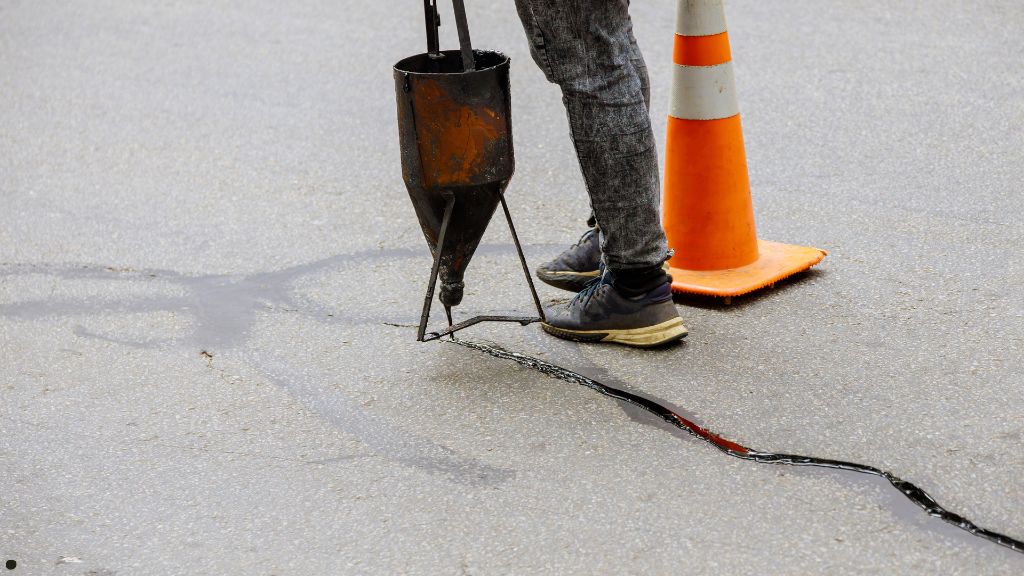
A driveway with visible cracks needs those cracks addressed before any sealcoat goes down, not after. Sealcoating over an open crack seals moisture into that crack rather than keeping it out, and the freeze and thaw cycle that follows can turn a small crack into a much bigger one by the time winter is over.
The order that actually protects a driveway looks like this:
- Clean and prep the surface to remove debris, oil stains, and loose material
- Fill and seal any existing cracks so there’s no open pathway for water
- Allow the crack filler to properly set before applying sealcoat
- Apply sealcoat in a single, even coat and give it the full window to cure
- Keep vehicles off the surface for the length of time the product actually needs
Skipping straight to sealcoating because it’s faster or the crack looks minor is one of the more common mistakes homeowners run into with fall projects. Crack filling done first is what makes the sealcoat that follows actually worth doing.
New Driveway Paving in Fall: A Different Set of Rules
Sealcoating an existing driveway and paving a brand new one in the fall are not the same conversation, even though homeowners often ask about them together this time of year.
New asphalt needs enough warm weather after installation to compact properly and finish curing before the ground freezes. A driveway poured too late in the fall can end up locked into a semi cured state once winter hits, which affects how well it holds up long term. That doesn’t mean fall paving is off the table entirely, it means the timeline has less room for delay than a summer project would, and a contractor should be upfront about whether there’s still enough of a warm weather stretch left to do it right.
For homeowners weighing driveway paving against sealcoating an existing surface, the honest starting point is an evaluation of what’s actually there now, since a driveway with a failing base underneath doesn’t get fixed by any amount of sealcoat, no matter how well it cures.
What Actually Drives Cost on a Fall Driveway Project
There’s no way to give an honest number without seeing the driveway, but a few variables consistently move the price on both sealcoating and paving jobs:
- The size and layout of the driveway, including curves, slopes, or multiple sections
- The current condition of the surface, since cracked or oxidized asphalt needs more prep than a driveway that’s been maintained regularly
- Accessibility for equipment, particularly on narrower or gated properties
- Whether the project is a sealcoat maintenance job or a full paving project
- How much crack repair or patchwork is needed before any sealcoat or new asphalt goes down
A quick evaluation before the season closes gives homeowners a real answer instead of a guess based on square footage alone.
Getting It Done Before the First Hard Freeze
Fall gives East Tennessee homeowners a genuine window to protect a driveway before winter, but that window has an end date, and it isn’t marked on anyone’s calendar. It closes quietly, once the nights turn consistently cold, whether or not the sealcoat job has been scheduled yet.
If your driveway is showing fading, oxidation, or early cracking, contact our team at Edward’s Blacktop Paving before that window closes. We’ve been paving and maintaining driveways throughout Knoxville and East Tennessee since 1976, and we’ll give you a straight answer about whether this fall is still the right time or whether it makes more sense to wait for spring.