
It’s the second week of July, and the facilities director at a middle school outside Knoxville is standing on the outdoor basketball court with a clipboard, looking at a crack pattern that wasn’t there in May. Summer break is when courts get quiet, and it’s also when small problems finally show themselves without three hundred students walking, dribbling, and running drills over them every day.
By the time the buses start running in August, there won’t be a window to shut the court down for repairs without displacing PE classes, team practices, and after school programs. Right now, in the gap between semesters, is the only real chance to fix it properly.
- What’s Actually Happening Under a Court That Looks Fine From a Distance
- Why Fresh Paint Over Old Cracks Is the Wrong Call
- The Prep Work Nobody Notices Until It’s Missing
- Repair or Replace: What Actually Decides the Answer
- Getting the Timing Right Before the First Bell Rings
- What Drives the Price on a School Court Project
- Ready Before the Bus Routes Start
What’s Actually Happening Under a Court That Looks Fine From a Distance
A sports court takes a different kind of abuse than a driveway or parking lot. There’s no rolling traffic to spread the load out. Instead, you get repeated, concentrated impact in the same handful of spots: under the basketball hoops, along the baseline, at the net posts on a tennis court. That repetition is what breaks asphalt down first, long before the rest of the surface shows any wear.
Underneath, the same freeze and thaw cycle that cracks driveways is at work on a court, just with less traffic to hide it. Water gets into a hairline crack, freezes, expands, and widens that crack a little more each cycle. Combine that with a base that was never compacted properly at installation, and the surface starts to telegraph every weak spot below it, as dips, soft edges, and eventually alligator cracking that spreads instead of staying contained.
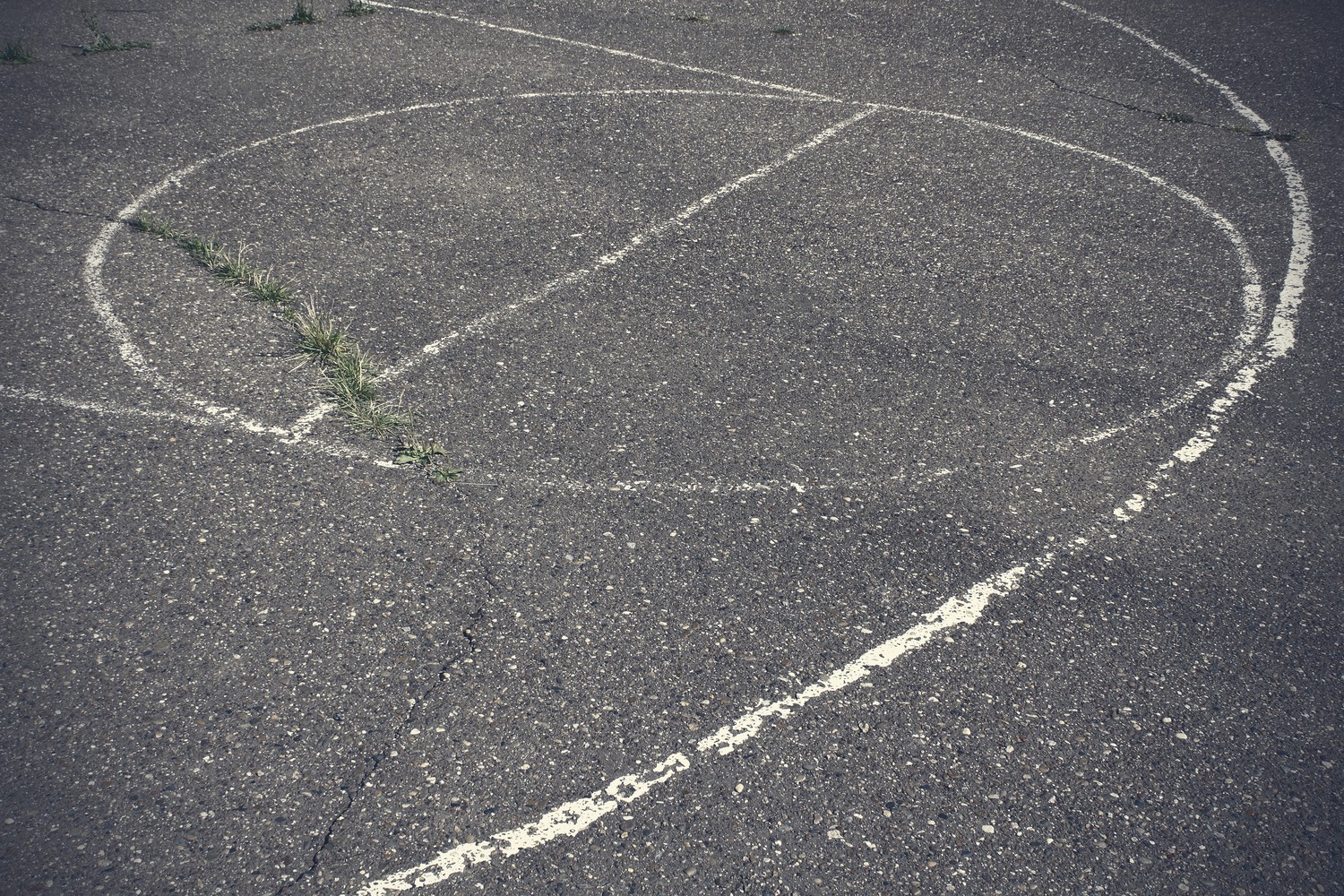
The tricky part for facilities staff is that a court can look structurally fine from twenty feet away and still be failing underneath. That’s why a proper evaluation involves more than a visual walk-through. It means checking how the surface responds underfoot in different spots, where water pools after a rain, and whether cracking is isolated or spreading in a pattern that points to a base problem.
Why Fresh Paint Over Old Cracks Is the Wrong Call
Here’s the part most school budgets get wrong, and it’s worth saying plainly: repainting the lines on a cracked court to make it look presentable for the new year almost always makes the underlying problem worse, not better.
Fresh striping paint seals the surface temporarily, which sounds like a good thing until you realize it traps moisture that’s already worked its way into existing cracks. That moisture has nowhere to go, so it keeps expanding those cracks from the inside, and by the following summer the court looks worse than if nothing had been done at all.
The counterintuitive move is to hold off on restriping until the surface itself has been addressed. A court with visible cracks needs those cracks filled or patched first. Only after that work is done does new striping actually protect the surface instead of hiding a problem that’s still active underneath it.
The Prep Work Nobody Notices Until It’s Missing
Grading and base preparation don’t show up in a photo of a finished court, but they’re the reason one court lasts through a decade of practices and games while another one is cracking within a few seasons.
A sports court has a tighter tolerance than almost any other paved surface on a school property. Uneven grading throws off ball bounce, creates standing water that turns into ice in winter, and can create a genuine trip hazard near the edges of the playing area. Getting that grade right, with just enough slope to shed water without the players ever noticing it, is where a project either gets built to last or doesn’t.
That’s also why sports court paving done right starts well before any asphalt gets laid. Site prep, proper aggregate base, and compaction all happen first, because no amount of quality asphalt on top will fix a base that was never built to hold up under repeated impact.
Repair or Replace: What Actually Decides the Answer
Not every court that’s showing damage needs to be torn out and replaced. The decision usually comes down to a handful of factors that facilities teams can walk through before calling a contractor:
- Whether cracking is isolated to a few areas or spread across most of the surface
- Whether the base underneath is still solid or showing signs of settling
- How much drainage has been compromised by low spots or standing water
- Whether the court has been resurfaced before and how that layer has held up
- The realistic remaining lifespan of the surface versus the cost of ongoing patch repairs
In a lot of cases, a court that’s five or ten years into its life just needs targeted asphalt repair and patchwork followed by sealcoating and fresh striping. A court with widespread base failure, on the other hand, is usually better served by a full resurface, because patching a bad base repeatedly ends up costing more over time than doing it right once.
Getting the Timing Right Before the First Bell Rings
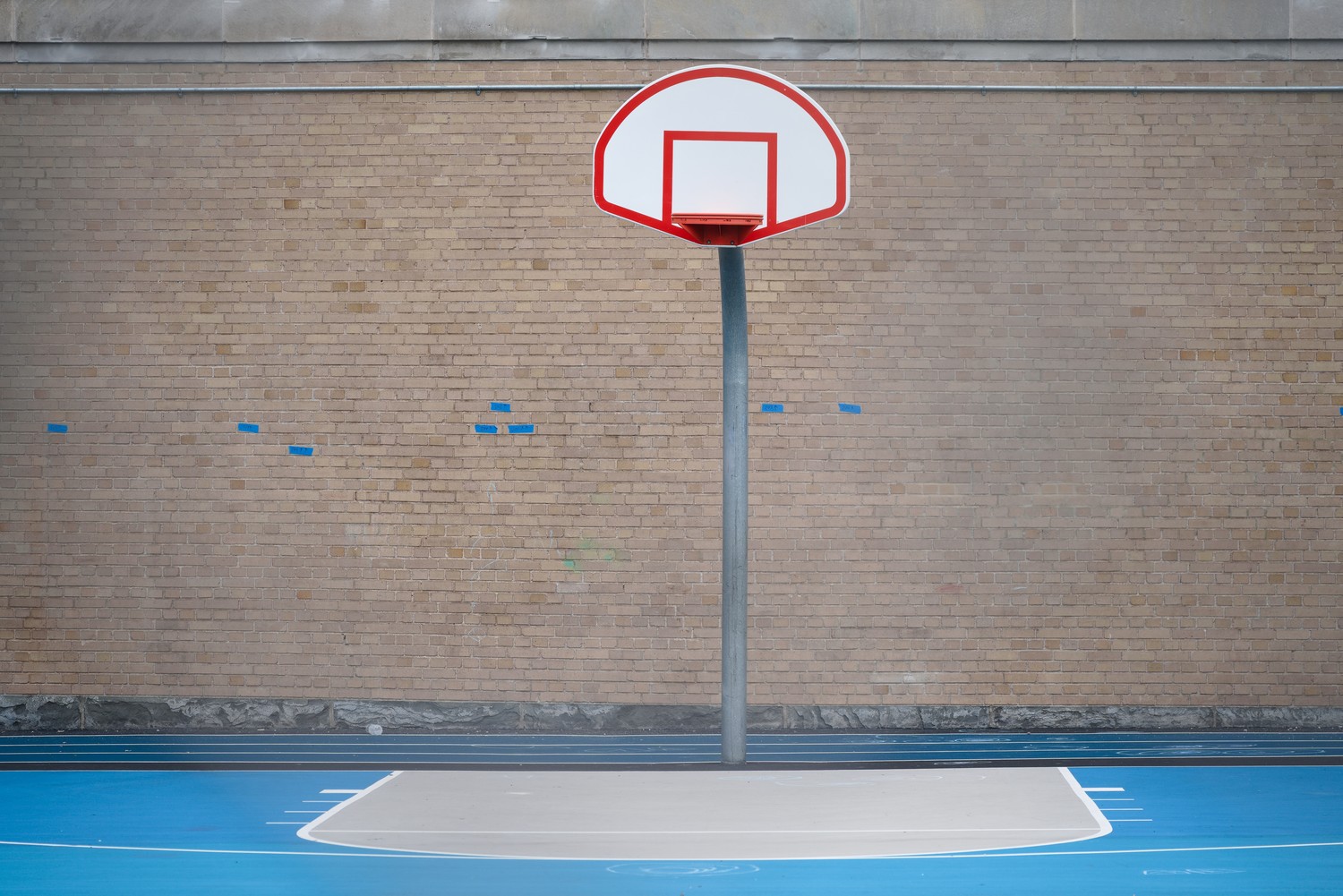
Summer break isn’t just convenient for scheduling, it’s the only realistic window most schools have. Once the year starts, a court gets used almost every day between PE classes, team practices, intramurals, and community programs after hours. Pulling it out of rotation once school is in session means displacing all of that onto other parts of campus that usually weren’t built to absorb the extra load.
Asphalt also cures and compacts well in warmer weather, which makes summer a genuinely good season for this kind of work, not just a scheduling necessity. The catch is that every school in the region is trying to book the same window, so projects that get planned in June or July have a much better shot at getting finished before students are back than ones that get scheduled in a rush during the first week of August.
What Drives the Price on a School Court Project
There’s no honest way to quote a school sports court project without seeing the site, but the variables that move the price are consistent from one school to the next:
- The size of the court and whether it’s a single court or a multi court complex
- The current condition of the base, since a failing base adds significant work that a surface only project wouldn’t need
- Site accessibility, including how equipment gets in and out around buildings, fencing, and playground equipment
- Whether the project is a repair, a full resurface, or new construction
- The scope of striping needed, since a multi use court with overlapping lines for basketball and other sports takes more layout work than a single sport court
A straightforward evaluation before the school year starts is the fastest way to get real numbers instead of a rough guess based on square footage alone.
Ready Before the Bus Routes Start
The window between the last day of the old school year and the first day of the new one is short, and it’s the only time most schools have to get a sports court fixed right without working around a full class schedule. Waiting until the cracks are impossible to ignore usually means choosing between a rushed repair or living with a hazard for another year.
If a court on your campus needs a real evaluation before students are back, contact our team at Edward’s Blacktop Paving. We’ve been grading, prepping, and paving properties throughout Knoxville and East Tennessee since 1976, and we handle the full scope of a school court project in house, from the base up to the final striping.